Corona-Warn-App was the official and open-source COVID-19 contact tracing app used for digital contact tracing in Germany made by SAP and Deutsche Telekom subsidiary T-Systems. It had been downloaded 22.8 million times as of 19 November 2020 and 26.2 million times as of 18 March 2021. The app has been promoted by billboard and broadcast advertisements, e.g. in cooperation with the German Football Association (DFB) and other prominent companies. The German government has announced that the app would no longer exchange tracing information as of April 30, 2023 & would enter hibernation as of June 1, 2023. == Effectiveness == Experts believe that time saved by using the app can be critical for improving the effectiveness contact tracing efforts. Some virologists say when at least 60% of people in Germany use it, it would be very effective. == Functioning == The app works with the Exposure Notification Framework (what is implemented in Google Play Services for Android and in iOS) by using Bluetooth to exchange codes with app users that are within 1.5 meters of each other for a period of at least 10 minutes. Anyone who tests positive for COVID-19 can share this information voluntarily with the app. Other app users are then notified about when, how long and at what distance they had contact with the infected person within a 14-day period. Testing is available for persons on a voluntary basis. === Server architecture === Based on the Client–server model five servers are operated within the app backend: the Corona-Warn-App server. It stores the authorized keys of infected users, referred to as diagnosis keys, from the past 14 days in its database. Stored diagnosis keys are grouped into regularly updated blocks which are transmitted to the Content Delivery Network. This interface supplies the keys for the app clients to download and locally compute a potential exposure risk. the Verification server. It is responsible for documenting the approval of the user to share their positive test result with the app and also to verify the test result. the Portal Server. It generates a so-called teleTAN token if the user did not give their consent to share their test result with the app at first but then changed their mind or if the local public health authority or test laboratory is not connected to the app system yet. the Test Result Server. It saves the test results provided by the local public health authorities or test laboratories for further use within the backend. the Federation Gateway Server. It connects to the national Corona-Warn-App servers of participating EU countries to enable transnational key exchange. By the distribution of the data on different servers the decoupling of the data becomes possible and results in an obstructed tracing of the app users. ==== Report of a positive COVID-19 test ==== The app provides a function to warn other app users by uploading their positive test result on a voluntarily and anonymous basis to the Corona-Warn-App server. In case the local public health authority or test laboratory is already connected to the app system, the user receives a QR-Code when the swab specimen is taken that can be scanned in the app. After scanning the QR-Code und the user getting authorized by the Verification server, the app receives an individual Registration token which gets stored locally and with which the status and the result of the test can be checked manually as well as automatically. If the local public health authority or test laboratory is not connected to the app system yet and the user wants to share their positive test result with other app users, it is required to request a teleTAN token by calling the verification hotline of the app. In both cases, the user can upload their diagnosis keys of the last 14 days to the Corona-Warn-App server in case their consent to share the information is given. The Corona-Warn-App server then verifies the uploaded keys by asking the Verification server if the keys are valid and if they are, the Corona-Warn-App server stores them in its database. == Privacy == The use of the app is voluntary. The app implements decentralized data storage to ensure data privacy. Employers can require that Corona-Warn be installed on company phones, but can not compel its use on private phones. == Funding == The open source app, which costs €20 million to develop is intended to supplement human contact tracing efforts, which Germany put in place during the early stages of the COVID-19 pandemic in Germany. In August 2022, a spokesperson for the German ministry of health announced that the total costs including all additional developments are now estimated to be closer to €150m. == Interoperability == At its start the app only worked in Germany, and Jens Spahn, than Federal Minister of Health (CDU), has said the development of a Europe-wide system is a future goal. With the update published on 19 October 2020 the app supports key-exchanges with the EU Interoperability Gateway and is therefore able to communicate with contact tracing apps from Ireland and Italy. Austria, Belgium, Czech Republic, Croatia, Cyprus, Denmark, Finland, Ireland, Italy, Latvia, Malta, Netherlands, Norway, Poland, Slovenia, Spain and Switzerland had joined the gateway as well and are also able to exchange keys with Corona-Warn-App. The app can be downloaded in many App stores outside of Germany. However, as of August 2021, the app is still unavailable for those of notable national German minorities like Turks, Russians or Ukrainians, who use App stores of their home countries. == Software variants == An unofficial Corona-Warn-App has been released on F-Droid, making the app available without proprietary components on Android phones. == Literature == Thomas Köllmann: Die Corona-Warn-App – Schnittstelle zwischen Datenschutz- und Arbeitsrecht. In: Neue Zeitschrift für Arbeitsrecht. Nr. 13, 10. Juli 2020, S. 831–836.
Human-in-the-loop
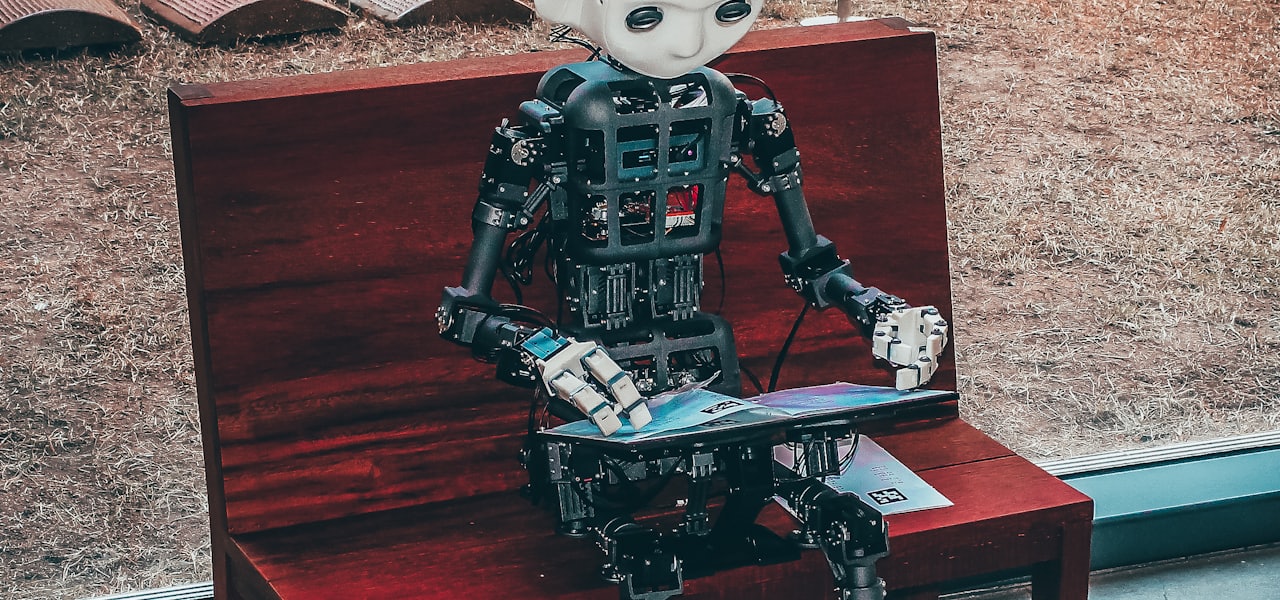
Human-in-the-loop (HITL) is used in multiple contexts. It can be defined as a model requiring human interaction. HITL is associated with modeling and simulation (M&S) in the live, virtual, and constructive taxonomy. HITL, along with the related human-on-the-loop, are also used in relation to lethal autonomous weapons. Further, HITL is used in the context of machine learning.It is also used in conversational AI to manage complex interactions that require human empathy. == Machine learning == In machine learning, HITL is used in the sense of humans aiding the computer in making the correct decisions in building a model. HITL improves machine learning over random sampling by selecting the most critical data needed to refine the model. == Simulation == In simulation, HITL models may conform to human factors requirements as in the case of a mockup. In this type of simulation, a human is always part of the simulation and consequently influences the outcome in such a way that is difficult if not impossible to reproduce exactly. HITL also readily allows for the identification of problems and requirements that may not be easily identified by other means of simulation. HITL is often referred to as an interactive simulation, which is a special kind of physical simulation in which physical simulations include human operators, such as in a flight or a driving simulator. === Benefits === Human-in-the-loop allows the user to change the outcome of an event or process. The immersion effectively contributes to a positive transfer of acquired skills into the real world. This can be demonstrated by trainees utilizing flight simulators in preparation to become pilots. HITL also allows for the acquisition of knowledge regarding how a new process may affect a particular event. Utilizing HITL allows participants to interact with realistic models and attempt to perform as they would in an actual scenario. HITL simulations bring to the surface issues that would not otherwise be apparent until after a new process has been deployed. A real-world example of HITL simulation as an evaluation tool is its usage by the Federal Aviation Administration (FAA) to allow air traffic controllers to test new automation procedures by directing the activities of simulated air traffic while monitoring the effect of the newly implemented procedures. As with most processes, there is always the possibility of human error, which can only be reproduced using HITL simulation. Although much can be done to automate systems, humans typically still need to take the information provided by a system to determine the next course of action based on their judgment and experience. Intelligent systems can only go so far in certain circumstances to automate a process; only humans in the simulation can accurately judge the final design. Tabletop simulation may be useful in the very early stages of project development for the purpose of collecting data to set broad parameters, but the important decisions require human-in-the-loop simulation. HITL reflects scenarios where human input remains essential despite advances in automation. === Within the virtual simulation taxonomy === Virtual simulations inject HITL in a central role by exercising motor control skills (e.g. flying an airplane), decision making skills (e.g. committing fire control resources to action), or communication skills (e.g. as members of a C4I team). === Examples === Flight simulators Driving simulators Marine simulators Video games Supply chain management simulators Digital puppetry === Misconceptions === Although human-in-the-loop simulation can include a computer simulation in the form of a synthetic environment, computer simulation is not necessarily a form of human-in-the-loop simulation, and is often considered as human-out-of-the loop simulation. In this particular case, a computer model’s behavior is modified according to a set of initial parameters. The results of the model differ from the results stemming from a true human-in-the-loop simulation because the results can easily be replicated time and time again, by simply providing identical parameters. == Weapons == === Taxonomy === Three classifications of the degree of human control of autonomous weapon systems were laid out by Bonnie Docherty in a 2012 Human Rights Watch report. human-in-the-loop: a human must instigate the action of the weapon (in other words not fully autonomous) human-on-the-loop: a human may abort an action human-out-of-the-loop: no human action is involved === Positive human action === In discussions of autonomous weapons and nuclear command and control, the phrase positive human action has been used alongside "human-in-the-loop" to emphasize that a human operator must affirmatively authorize the use of force. Descriptions of the United States Navy's Aegis Combat System have used the phrase in characterizing a requirement for affirmative human action to initiate live firing. A survey of autonomous weapons systems described the Aegis "Auto SM" mode as one in which "the system fully develops the engagement process however engagement requires positive human action". The phrase entered United States federal law in the National Defense Authorization Act for Fiscal Year 2025, which stipulates that artificial intelligence systems not compromise "the principle of requiring positive human actions in execution of decisions by the President with respect to the employment of nuclear weapons".
Mutation (evolutionary algorithm)
Mutation is a genetic operator used to maintain genetic diversity of the chromosomes of a population of an evolutionary algorithm (EA), including genetic algorithms in particular. It is analogous to biological mutation. The classic example of a mutation operator of a binary coded genetic algorithm (GA) involves a probability that an arbitrary bit in a genetic sequence will be flipped from its original state. A common method of implementing the mutation operator involves generating a random variable for each bit in a sequence. This random variable tells whether or not a particular bit will be flipped. This mutation procedure, based on the biological point mutation, is called single point mutation. Other types of mutation operators are commonly used for representations other than binary, such as floating-point encodings or representations for combinatorial problems. The purpose of mutation in EAs is to introduce diversity into the sampled population. Mutation operators are used in an attempt to avoid local minima by preventing the population of chromosomes from becoming too similar to each other, thus slowing or even stopping convergence to the global optimum. This reasoning also leads most EAs to avoid only taking the fittest of the population in generating the next generation, but rather selecting a random (or semi-random) set with a weighting toward those that are fitter. The following requirements apply to all mutation operators used in an EA: every point in the search space must be reachable by one or more mutations. there must be no preference for parts or directions in the search space (no drift). small mutations should be more probable than large ones. For different genome types, different mutation types are suitable. Some mutations are Gaussian, Uniform, Zigzag, Scramble, Insertion, Inversion, Swap, and so on. An overview and more operators than those presented below can be found in the introductory book by Eiben and Smith or in. == Bit string mutation == The mutation of bit strings ensue through bit flips at random positions. Example: The probability of a mutation of a bit is 1 l {\displaystyle {\frac {1}{l}}} , where l {\displaystyle l} is the length of the binary vector. Thus, a mutation rate of 1 {\displaystyle 1} per mutation and individual selected for mutation is reached. == Mutation of real numbers == Many EAs, such as the evolution strategy or the real-coded genetic algorithms, work with real numbers instead of bit strings. This is due to the good experiences that have been made with this type of coding. The value of a real-valued gene can either be changed or redetermined. A mutation that implements the latter should only ever be used in conjunction with the value-changing mutations and then only with comparatively low probability, as it can lead to large changes. In practical applications, the respective value range of the decision variables to be changed of the optimisation problem to be solved is usually limited. Accordingly, the values of the associated genes are each restricted to an interval [ x min , x max ] {\displaystyle [x_{\min },x_{\max }]} . Mutations may or may not take these restrictions into account. In the latter case, suitable post-treatment is then required as described below. === Mutation without consideration of restrictions === A real number x {\displaystyle x} can be mutated using normal distribution N ( 0 , σ ) {\displaystyle {\mathcal {N}}(0,\sigma )} by adding the generated random value to the old value of the gene, resulting in the mutated value x ′ {\displaystyle x'} : x ′ = x + N ( 0 , σ ) {\displaystyle x'=x+{\mathcal {N}}(0,\sigma )} In the case of genes with a restricted range of values, it is a good idea to choose the step size of the mutation σ {\displaystyle \sigma } so that it reasonably fits the range [ x min , x max ] {\displaystyle [x_{\min },x_{\max }]} of the gene to be changed, e.g.: σ = x max − x min 6 {\displaystyle \sigma ={\frac {x_{\text{max}}-x_{\text{min}}}{6}}} The step size can also be adjusted to the smaller permissible change range depending on the current value. In any case, however, it is likely that the new value x ′ {\displaystyle x'} of the gene will be outside the permissible range of values. Such a case must be considered a lethal mutation, since the obvious repair by using the respective violated limit as the new value of the gene would lead to a drift. This is because the limit value would then be selected with the entire probability of the values beyond the limit of the value range. The evolution strategy works with real numbers and mutation based on normal distribution. The step sizes are part of the chromosome and are subject to evolution together with the actual decision variables. === Mutation with consideration of restrictions === One possible form of changing the value of a gene while taking its value range [ x min , x max ] {\displaystyle [x_{\min },x_{\max }]} into account is the mutation relative parameter change of the evolutionary algorithm GLEAM (General Learning Evolutionary Algorithm and Method), in which, as with the mutation presented earlier, small changes are more likely than large ones. First, an equally distributed decision is made as to whether the current value x {\displaystyle x} should be increased or decreased and then the corresponding total change interval is determined. Without loss of generality, an increase is assumed for the explanation and the total change interval is then [ x , x max ] {\displaystyle [x,x_{\max }]} . It is divided into k {\displaystyle k} sub-areas of equal size with the width δ {\displaystyle \delta } , from which k {\displaystyle k} sub-change intervals of different size are formed: i {\displaystyle i} -th sub-change interval: [ x , x + δ ⋅ i ] {\displaystyle [x,x+\delta \cdot i]} with δ = ( x max − x ) k {\displaystyle \delta ={\frac {(x_{\text{max}}-x)}{k}}} and i = 1 , … , k {\displaystyle i=1,\dots ,k} Subsequently, one of the k {\displaystyle k} sub-change intervals is selected in equal distribution and a random number, also equally distributed, is drawn from it as the new value x ′ {\displaystyle x'} of the gene. The resulting summed probabilities of the sub-change intervals result in the probability distribution of the k {\displaystyle k} sub-areas shown in the adjacent figure for the exemplary case of k = 10 {\displaystyle k=10} . This is not a normal distribution as before, but this distribution also clearly favours small changes over larger ones. This mutation for larger values of k {\displaystyle k} , such as 10, is less well suited for tasks where the optimum lies on one of the value range boundaries. This can be remedied by significantly reducing k {\displaystyle k} when a gene value approaches its limits very closely. === Common properties === For both mutation operators for real-valued numbers, the probability of an increase and decrease is independent of the current value and is 50% in each case. In addition, small changes are considerably more likely than large ones. For mixed-integer optimization problems, rounding is usually used. == Mutation of permutations == Mutations of permutations are specially designed for genomes that are themselves permutations of a set. These are often used to solve combinatorial tasks. In the two mutations presented, parts of the genome are rotated or inverted. === Rotation to the right === The presentation of the procedure is illustrated by an example on the right: === Inversion === The presentation of the procedure is illustrated by an example on the right: === Variants with preference for smaller changes === The requirement raised at the beginning for mutations, according to which small changes should be more probable than large ones, is only inadequately fulfilled by the two permutation mutations presented, since the lengths of the partial lists and the number of shift positions are determined in an equally distributed manner. However, the longer the partial list and the shift, the greater the change in gene order. This can be remedied by the following modifications. The end index j {\displaystyle j} of the partial lists is determined as the distance d {\displaystyle d} to the start index i {\displaystyle i} : j = ( i + d ) mod | P 0 | {\displaystyle j=(i+d){\bmod {\left|P_{0}\right|}}} where d {\displaystyle d} is determined randomly according to one of the two procedures for the mutation of real numbers from the interval [ 0 , | P 0 | − 1 ] {\displaystyle \left[0,\left|P_{0}\right|-1\right]} and rounded. For the rotation, k {\displaystyle k} is determined similarly to the distance d {\displaystyle d} , but the value 0 {\displaystyle 0} is forbidden. For the inversion, note that i ≠ j {\displaystyle i\neq j} must hold, so for d {\displaystyle d} the value 0 {\displaystyle 0} must be excluded.
Crossover (evolutionary algorithm)
Crossover in evolutionary algorithms and evolutionary computation, also called recombination, is a genetic operator used to combine the genetic information of two parents to generate new offspring. It is one way to stochastically generate new solutions from an existing population, and is analogous to the crossover that happens during sexual reproduction in biology. New solutions can also be generated by cloning an existing solution, which is analogous to asexual reproduction. Newly generated solutions may be mutated before being added to the population. The aim of recombination is to transfer good characteristics from two different parents to one child. Different algorithms in evolutionary computation may use different data structures to store genetic information, and each genetic representation can be recombined with different crossover operators. Typical data structures that can be recombined with crossover are bit arrays, vectors of real numbers, or trees. The list of operators presented below is by no means complete and serves mainly as an exemplary illustration of this dyadic genetic operator type. More operators and more details can be found in the literature. == Crossover for binary arrays == Traditional genetic algorithms store genetic information in a chromosome represented by a bit array. Crossover methods for bit arrays are popular and an illustrative example of genetic recombination. === One-point crossover === A point on both parents' chromosomes is picked randomly, and designated a 'crossover point'. Bits to the right of that point are swapped between the two parent chromosomes. This results in two offspring, each carrying some genetic information from both parents. === Two-point and k-point crossover === In two-point crossover, two crossover points are picked randomly from the parent chromosomes. The bits in between the two points are swapped between the parent organisms. Two-point crossover is equivalent to performing two single-point crossovers with different crossover points. This strategy can be generalized to k-point crossover for any positive integer k, picking k crossover points. === Uniform crossover === In uniform crossover, typically, each bit is chosen from either parent with equal probability. Other mixing ratios are sometimes used, resulting in offspring which inherit more genetic information from one parent than the other. In a uniform crossover, we don’t divide the chromosome into segments, rather we treat each gene separately. In this, we essentially flip a coin for each chromosome to decide whether or not it will be included in the off-spring. == Crossover for integer or real-valued genomes == For the crossover operators presented above and for most other crossover operators for bit strings, it holds that they can also be applied accordingly to integer or real-valued genomes whose genes each consist of an integer or real-valued number. Instead of individual bits, integer or real-valued numbers are then simply copied into the child genome. The offspring lie on the remaining corners of the hyperbody spanned by the two parents P 1 = ( 1.5 , 6 , 8 ) {\displaystyle P_{1}=(1.5,6,8)} and P 2 = ( 7 , 2 , 1 ) {\displaystyle P_{2}=(7,2,1)} , as exemplified in the accompanying image for the three-dimensional case. === Discrete recombination === If the rules of the uniform crossover for bit strings are applied during the generation of the offspring, this is also called discrete recombination. === Intermediate recombination === In this recombination operator, the allele values of the child genome a i {\displaystyle a_{i}} are generated by mixing the alleles of the two parent genomes a i , P 1 {\displaystyle a_{i,P_{1}}} and a i , P 2 {\displaystyle a_{i,P_{2}}} : α i = α i , P 1 ⋅ β i + α i , P 2 ⋅ ( 1 − β i ) w i t h β i ∈ [ − d , 1 + d ] {\displaystyle \alpha _{i}=\alpha _{i,P_{1}}\cdot \beta _{i}+\alpha _{i,P_{2}}\cdot \left(1-\beta _{i}\right)\quad {\mathsf {with}}\quad \beta _{i}\in \left[-d,1+d\right]} randomly equally distributed per gene i {\displaystyle i} The choice of the interval [ − d , 1 + d ] {\displaystyle [-d,1+d]} causes that besides the interior of the hyperbody spanned by the allele values of the parent genes additionally a certain environment for the range of values of the offspring is in question. A value of 0.25 {\displaystyle 0.25} is recommended for d {\displaystyle d} to counteract the tendency to reduce the allele values that otherwise exists at d = 0 {\displaystyle d=0} . The adjacent figure shows for the two-dimensional case the range of possible new alleles of the two exemplary parents P 1 = ( 3 , 6 ) {\displaystyle P_{1}=(3,6)} and P 2 = ( 9 , 2 ) {\displaystyle P_{2}=(9,2)} in intermediate recombination. The offspring of discrete recombination C 1 {\displaystyle C_{1}} and C 2 {\displaystyle C_{2}} are also plotted. Intermediate recombination satisfies the arithmetic calculation of the allele values of the child genome required by virtual alphabet theory. Discrete and intermediate recombination are used as a standard in the evolution strategy. == Crossover for permutations == For combinatorial tasks, permutations are usually used that are specifically designed for genomes that are themselves permutations of a set. The underlying set is usually a subset of N {\displaystyle \mathbb {N} } or N 0 {\displaystyle \mathbb {N} _{0}} . If 1- or n-point or uniform crossover for integer genomes is used for such genomes, a child genome may contain some values twice and others may be missing. This can be remedied by genetic repair, e.g. by replacing the redundant genes in positional fidelity for missing ones from the other child genome. In order to avoid the generation of invalid offspring, special crossover operators for permutations have been developed which fulfill the basic requirements of such operators for permutations, namely that all elements of the initial permutation are also present in the new one and only the order is changed. It can be distinguished between combinatorial tasks, where all sequences are admissible, and those where there are constraints in the form of inadmissible partial sequences. A well-known representative of the first task type is the traveling salesman problem (TSP), where the goal is to visit a set of cities exactly once on the shortest tour. An example of the constrained task type is the scheduling of multiple workflows. Workflows involve sequence constraints on some of the individual work steps. For example, a thread cannot be cut until the corresponding hole has been drilled in a workpiece. Such problems are also called order-based permutations. In the following, two crossover operators are presented as examples, the partially mapped crossover (PMX) motivated by the TSP and the order crossover (OX1) designed for order-based permutations. A second offspring can be produced in each case by exchanging the parent chromosomes. === Partially mapped crossover (PMX) === The PMX operator was designed as a recombination operator for TSP like Problems. The explanation of the procedure is illustrated by an example: === Order crossover (OX1) === The order crossover goes back to Davis in its original form and is presented here in a slightly generalized version with more than two crossover points. It transfers information about the relative order from the second parent to the offspring. First, the number and position of the crossover points are determined randomly. The resulting gene sequences are then processed as described below: Among other things, order crossover is well suited for scheduling multiple workflows, when used in conjunction with 1- and n-point crossover. === Further crossover operators for permutations === Over time, a large number of crossover operators for permutations have been proposed, so the following list is only a small selection. For more information, the reader is referred to the literature. cycle crossover (CX) order-based crossover (OX2) position-based crossover (POS) edge recombination voting recombination (VR) alternating-positions crossover (AP) maximal preservative crossover (MPX) merge crossover (MX) sequential constructive crossover operator (SCX) The usual approach to solving TSP-like problems by genetic or, more generally, evolutionary algorithms, presented earlier, is either to repair illegal descendants or to adjust the operators appropriately so that illegal offspring do not arise in the first place. Alternatively, Riazi suggests the use of a double chromosome representation, which avoids illegal offspring.
Absorbing Markov chain
In the mathematical theory of probability, an absorbing Markov chain is a Markov chain in which every state can reach an absorbing state. An absorbing state is a state that, once entered, cannot be left. Like general Markov chains, there can be continuous-time absorbing Markov chains with an infinite state space. However, this article concentrates on the discrete-time discrete-state-space case. == Formal definition == A Markov chain is an absorbing chain if there is at least one absorbing state and it is possible to go from any state to at least one absorbing state in a finite number of steps. In an absorbing Markov chain, a state that is not absorbing is called transient. === Canonical form === Let an absorbing Markov chain with transition matrix P have t transient states and r absorbing states. The rows of P represent sources, while columns represent destinations. By ordering the transient states before the absorbing states, it can be assumed that P has the form P = [ Q R 0 I r ] , {\displaystyle P={\begin{bmatrix}Q&R\\\mathbf {0} &I_{r}\end{bmatrix}},} where Q is a t-by-t matrix, R is a nonzero t-by-r matrix, 0 is an r-by-t zero matrix, and Ir is the r-by-r identity matrix. Thus, Q describes the probability of transitioning from some transient state to another while R describes the probability of transitioning from some transient state to some absorbing state. The probability of transitioning from i to j in exactly k steps is the (i,j)-entry of Pk, further computed below. When considering only transient states, the probability is found in the upper left of Pk, the (i,j)-entry of Qk. == Fundamental matrix == === Expected number of visits to a transient state === A basic property about an absorbing Markov chain is the expected number of visits to a transient state j starting from a transient state i (before being absorbed). This can be established to be given by the (i, j) entry of so-called fundamental matrix N, obtained by summing Qk for all k (from 0 to ∞). It can be proven that N := ∑ k = 0 ∞ Q k = ( I t − Q ) − 1 , {\displaystyle N:=\sum _{k=0}^{\infty }Q^{k}=(I_{t}-Q)^{-1},} where It is the t-by-t identity matrix. The computation of this formula is the matrix equivalent of the geometric series of scalars, ∑ k = 0 ∞ q k = 1 1 − q {\displaystyle {\textstyle \sum }_{k=0}^{\infty }q^{k}={\tfrac {1}{1-q}}} . With the matrix N in hand, also other properties of the Markov chain are easy to obtain. === Expected number of steps before being absorbed === The expected number of steps before being absorbed in any absorbing state, when starting in transient state i can be computed via a sum over transient states. The value is given by the ith entry of the vector t := N 1 , {\displaystyle \mathbf {t} :=N\mathbf {1} ,} where 1 is a length-t column vector whose entries are all 1. === Absorbing probabilities === By induction, P k = [ Q k ( I t − Q k ) N R 0 I r ] . {\displaystyle P^{k}={\begin{bmatrix}Q^{k}&(I_{t}-Q^{k})NR\\\mathbf {0} &I_{r}\end{bmatrix}}.} The probability of eventually being absorbed in the absorbing state j when starting from transient state i is given by the (i,j)-entry of the matrix B := N R {\displaystyle B:=NR} . The number of columns of this matrix equals the number of absorbing states r. An approximation of those probabilities can also be obtained directly from the (i,j)-entry of P k {\displaystyle P^{k}} for a large enough value of k, when i is the index of a transient, and j the index of an absorbing state. This is because ( lim k → ∞ P k ) i , t + j = B i , j {\displaystyle \left(\lim _{k\to \infty }P^{k}\right)_{i,t+j}=B_{i,j}} . === Transient visiting probabilities === The probability of visiting transient state j when starting at a transient state i is the (i,j)-entry of the matrix H := ( N − I t ) ( N dg ) − 1 , {\displaystyle H:=(N-I_{t})(N_{\operatorname {dg} })^{-1},} where Ndg is the diagonal matrix with the same diagonal as N. === Variance on number of transient visits === The variance on the number of visits to a transient state j with starting at a transient state i (before being absorbed) is the (i,j)-entry of the matrix N 2 := N ( 2 N dg − I t ) − N sq , {\displaystyle N_{2}:=N(2N_{\operatorname {dg} }-I_{t})-N_{\operatorname {sq} },} where Nsq is the Hadamard product of N with itself (i.e. each entry of N is squared). === Variance on number of steps === The variance on the number of steps before being absorbed when starting in transient state i is the ith entry of the vector ( 2 N − I t ) t − t sq , {\displaystyle (2N-I_{t})\mathbf {t} -\mathbf {t} _{\operatorname {sq} },} where tsq is the Hadamard product of t with itself (i.e., as with Nsq, each entry of t is squared). == Examples == === String generation === Consider the process of repeatedly flipping a fair coin until the sequence (heads, tails, heads) appears. This process is modeled by an absorbing Markov chain with transition matrix P = [ 1 / 2 1 / 2 0 0 0 1 / 2 1 / 2 0 1 / 2 0 0 1 / 2 0 0 0 1 ] . {\displaystyle P={\begin{bmatrix}1/2&1/2&0&0\\0&1/2&1/2&0\\1/2&0&0&1/2\\0&0&0&1\end{bmatrix}}.} The first state represents the empty string, the second state the string "H", the third state the string "HT", and the fourth state the string "HTH". Although in reality, the coin flips cease after the string "HTH" is generated, the perspective of the absorbing Markov chain is that the process has transitioned into the absorbing state representing the string "HTH" and, therefore, cannot leave. For this absorbing Markov chain, the fundamental matrix is N = ( I − Q ) − 1 = ( [ 1 0 0 0 1 0 0 0 1 ] − [ 1 / 2 1 / 2 0 0 1 / 2 1 / 2 1 / 2 0 0 ] ) − 1 = [ 1 / 2 − 1 / 2 0 0 1 / 2 − 1 / 2 − 1 / 2 0 1 ] − 1 = [ 4 4 2 2 4 2 2 2 2 ] . {\displaystyle {\begin{aligned}N&=(I-Q)^{-1}=\left({\begin{bmatrix}1&0&0\\0&1&0\\0&0&1\end{bmatrix}}-{\begin{bmatrix}1/2&1/2&0\\0&1/2&1/2\\1/2&0&0\end{bmatrix}}\right)^{-1}\\[4pt]&={\begin{bmatrix}1/2&-1/2&0\\0&1/2&-1/2\\-1/2&0&1\end{bmatrix}}^{-1}={\begin{bmatrix}4&4&2\\2&4&2\\2&2&2\end{bmatrix}}.\end{aligned}}} The expected number of steps starting from each of the transient states is t = N 1 = [ 4 4 2 2 4 2 2 2 2 ] [ 1 1 1 ] = [ 10 8 6 ] . {\displaystyle \mathbf {t} =N\mathbf {1} ={\begin{bmatrix}4&4&2\\2&4&2\\2&2&2\end{bmatrix}}{\begin{bmatrix}1\\1\\1\end{bmatrix}}={\begin{bmatrix}10\\8\\6\end{bmatrix}}.} Therefore, the expected number of coin flips before observing the sequence (heads, tails, heads) is 10, the entry for the state representing the empty string. === Games of chance === Games based entirely on chance can be modeled by an absorbing Markov chain. A classic example of this is the ancient Indian board game Snakes and Ladders. The graph on the left plots the probability mass in the lone absorbing state that represents the final square as the transition matrix is raised to larger and larger powers. To determine the expected number of turns to complete the game, compute the vector t as described above and examine tstart, which is approximately 39.2. === Infectious disease testing === Infectious disease testing, either of blood products or in medical clinics, is often taught as an example of an absorbing Markov chain. The public U.S. Centers for Disease Control and Prevention (CDC) model for HIV and for hepatitis B, for example, illustrates the property that absorbing Markov chains can lead to the detection of disease, versus the loss of detection through other means. In the standard CDC model, the Markov chain has five states, a state in which the individual is uninfected, then a state with infected but undetectable virus, a state with detectable virus, and absorbing states of having quit/been lost from the clinic, or of having been detected (the goal). The typical rates of transition between the Markov states are the probability p per unit time of being infected with the virus, w for the rate of window period removal (time until virus is detectable), q for quit/loss rate from the system, and d for detection, assuming a typical rate λ {\displaystyle \lambda } at which the health system administers tests of the blood product or patients in question. It follows that we can "walk along" the Markov model to identify the overall probability of detection for a person starting as undetected, by multiplying the probabilities of transition to each next state of the model as: p ( p + q ) w ( w + q ) d ( d + q ) {\displaystyle {\frac {p}{(p+q)}}{\frac {w}{(w+q)}}{\frac {d}{(d+q)}}} . The subsequent total absolute number of false negative tests—the primary CDC concern—would then be the rate of tests, multiplied by the probability of reaching the infected but undetectable state, times the duration of staying in the infected undetectable state: p ( p + q ) 1 ( w + q ) λ {\displaystyle {\frac {p}{(p+q)}}{\frac {1}{(w+q)}}\lambda } .
Adversarial stylometry
Adversarial stylometry is the practice of altering writing style to reduce the potential for stylometry to discover the author's identity or their characteristics. This task is also known as authorship obfuscation or authorship anonymisation. Stylometry poses a significant privacy challenge in its ability to unmask anonymous authors or to link pseudonyms to an author's other identities, which, for example, creates difficulties for whistleblowers, activists, and hoaxers and fraudsters. The privacy risk is expected to grow as machine learning techniques and text corpora develop. All adversarial stylometry shares the core idea of faithfully paraphrasing the source text so that the meaning is unchanged but the stylistic signals are obscured. Such a faithful paraphrase is an adversarial example for a stylometric classifier. Several broad approaches to this exist, with some overlap: imitation, substituting the author's own style for another's; translation, applying machine translation with the hope that this eliminates characteristic style in the source text; and obfuscation, deliberately modifying a text's style to make it not resemble the author's own. Manually obscuring style is possible, but laborious; in some circumstances, it is preferable or necessary. Automated tooling, either semi- or fully-automatic, could assist an author. How best to perform the task and the design of such tools is an open research question. While some approaches have been shown to be able to defeat particular stylometric analyses, particularly those that do not account for the potential of adversariality, establishing safety in the face of unknown analyses is an issue. Ensuring the faithfulness of the paraphrase is a critical challenge for automated tools. It is uncertain if the practice of adversarial stylometry is detectable in itself. Some studies have found that particular methods produced signals in the output text, but a stylometrist who is uncertain of what methods may have been used may not be able to reliably detect them. == History == Rao & Rohatgi (2000), an early work in adversarial stylometry, identified machine translation as a possibility, but noted that the quality of translators available at the time presented severe challenges. Kacmarcik & Gamon (2006) is another early work. Brennan, Afroz & Greenstadt (2012) performed the first evaluation of adversarial stylometric methods on actual texts. Brennan & Greenstadt (2009) introduced the first corpus of adversarially authored texts specifically for evaluating stylometric methods; other corpora include the International Imitation Hemingway Competition, the Faux Faulkner contest, and the hoax blog A Gay Girl in Damascus. == Motivations == Rao & Rohatgi (2000) suggest that short, unattributed documents (i.e., anonymous posts) are not at risk of stylometric identification, but pseudonymous authors who have not practiced adversarial stylometry in producing corpuses of thousands of words may be vulnerable. Narayanan et al. (2012) attempted large-scale deanonymisation of 100,000 blog authors with mixed results: the identifications were significantly better than chance, but only accurately matched the blog and author a fifth of the time; identification improved with the number of posts written by the author in the corpus. Even if an author is not identified, some of their characteristics may still be deduced stylometrically, or stylometry may narrow the anonymity set of potential authors sufficiently for other information to complete the identification. Detecting author characteristics (e.g., gender or age) is often simpler than identifying an author from a large, possibly open, set of candidates. Modern machine learning techniques offer powerful tools for identification; further development of corpora and computational stylometric techniques are likely to raise further privacy issues. Gröndahl & Asokan (2020a) say that the general validity of the hypothesis underlying stylometry—that authors have invariant, content-independent 'style fingerprints'—is uncertain, but "the deanonymisation attack is a real privacy concern". Those interested in practicing adversarial stylometry and stylistic deception include whistleblowers avoiding retribution; journalists and activists; perpetrators of frauds and hoaxes; authors of fake reviews; literary forgers; criminals disguising their identity from investigators; and, generally, anyone with a desire for anonymity or pseudonymity. Authors, or agents acting on behalf of authors, may also attempt to remove stylistic clues to author characteristics (e.g., race or gender) so that knowledge of those characteristics cannot be used for discrimination (e.g., through algorithmic bias). Another possible use for adversarial stylometry is in disguising automatically generated text as human-authored. == Methods == With imitation, the author attempts to mislead stylometry by matching their style to another author's. An incomplete imitation, where some of the true author's unique characteristics appear alongside the imitated author's, can be a detectable signal for the use of adversarial stylometry. Imitation can be performed automatically with style transfer systems, though this typically requires a large corpus in the target style for the system to learn from. Another approach is translation, which employs machine translation of a source text to eliminate characteristic style, often through multiple translators in sequence to produce a round-trip translation. Such chained translation can lead to texts being significantly altered, even to the point of incomprehensibility; improved translation tools reduce this risk. More simply-structured texts can be easier to machine translate without losing the original meaning. Machine translation blurs into direct stylistic imitation or obfuscation achieved through automated style transfer, which can be viewed as a "translation" with the same language as input and output. With low-quality translation tools, an author can be required to manually correct major translation errors while avoiding the hazard of re-introducing stylistic characteristics. Wang, Juola & Riddell (2022) found that gross errors introduced by Google Translate were rare, but more common with several intermediate translations—however, occasional simple or short sentences and misspellings in the source text appeared verbatim in the output, potentially providing an identifying signal. Chain translation can leave characteristic traces of its application in a document, which may allow reconstruction of the intermediate languages used and the number of translation steps performed. Obfuscation involves deliberately changing the style of a text to reduce its similarity to other texts by some metric; this may be performed at the time of writing by conscious modification, or as part of a revision process with feedback from the metric being targeted as an input to decide when the text has been sufficiently obfuscated. In contrast to translation, complex texts can offer more opportunities for effective obfuscation without altering meaning, and likewise genres with more permissible variation allow more obfuscation. However, longer texts are harder to thoroughly obfuscate. Obfuscation can blend into imitation if the author develops a novel target style, distinct from their original style. With respect to masking author characteristics, obfuscation may aim to achieve a union (adding signals for imitated characteristics) or an intersection (removing signals and normalising) of other authors' styles. Avoiding the author's own idiosyncrasies and producing a "normalised" text is a critical obfuscatory step: an author may have a unique tendency to misspell certain words, use particular variants, or to format a document in a characteristic way. Stylometric signals vary in how simply they can be adversarially masked; an author may easily change their vocabulary by conscious choice, but altering the pattern of grammar or the letter frequency in their text may be harder to achieve, though Juola & Vescovi (2011) report that imitation typically succeeds at masking more characteristics than obfuscation. Automated obfuscation may require large amounts of training data written by the author. Concerning automated implementations of adversarial stylometry, two possible implementations are rule-based systems for paraphrasing; and encoder–decoder architectures, where the text passes through an intermediate format that is (intended to be) style-neutral. Another division in automated methods is whether there is feedback from an identification system or not. With such feedback, finding paraphrases for author masking has been characterised as a heuristic search problem, exploring textual variants until the result is stylistically sufficiently far (in the case of obfuscation) or near (in the case of imitation), which then constitutes an adversarial example for that identification system. == Evaluation == How
Constructing skill trees
Constructing skill trees (CST) is a hierarchical reinforcement learning algorithm which can build skill trees from a set of sample solution trajectories obtained from demonstration. CST uses an incremental MAP (maximum a posteriori) change point detection algorithm to segment each demonstration trajectory into skills and integrate the results into a skill tree. CST was introduced by George Konidaris, Scott Kuindersma, Andrew Barto and Roderic Grupen in 2010. == Algorithm == CST consists of mainly three parts;change point detection, alignment and merging. The main focus of CST is online change-point detection. The change-point detection algorithm is used to segment data into skills and uses the sum of discounted reward R t {\displaystyle R_{t}} as the target regression variable. Each skill is assigned an appropriate abstraction. A particle filter is used to control the computational complexity of CST. The change point detection algorithm is implemented as follows. The data for times t ∈ T {\displaystyle t\in T} and models Q with prior p ( q ∈ Q ) {\displaystyle p(q\in Q)} are given. The algorithm is assumed to be able to fit a segment from time j + 1 {\displaystyle j+1} to t using model q with the fit probability P ( j , t , q ) {\displaystyle P(j,t,q)_{}^{}} . A linear regression model with Gaussian noise is used to compute P ( j , t , q ) {\displaystyle P(j,t,q)} . The Gaussian noise prior has mean zero, and variance which follows I n v e r s e G a m m a ( v 2 , u 2 ) {\displaystyle \mathrm {InverseGamma} \left({\frac {v}{2}},{\frac {u}{2}}\right)} . The prior for each weight follows N o r m a l ( 0 , σ 2 δ ) {\displaystyle \mathrm {Normal} (0,\sigma ^{2}\delta )} . The fit probability P ( j , t , q ) {\displaystyle P(j,t,q)} is computed by the following equation. P ( j , t , q ) = π − n 2 δ m | ( A + D ) − 1 | 1 2 u v 2 ( y + u ) u + v 2 Γ ( n + v 2 ) Γ ( v 2 ) {\displaystyle P(j,t,q)={\frac {\pi ^{-{\frac {n}{2}}}}{\delta ^{m}}}\left|(A+D)^{-1}\right|^{\frac {1}{2}}{\frac {u^{\frac {v}{2}}}{(y+u)^{\frac {u+v}{2}}}}{\frac {\Gamma ({\frac {n+v}{2}})}{\Gamma ({\frac {v}{2}})}}} Then, CST compute the probability of the changepoint at time j with model q, P t ( j , q ) {\displaystyle P_{t}(j,q)} and P j MAP {\displaystyle P_{j}^{\text{MAP}}} using a Viterbi algorithm. P t ( j , q ) = ( 1 − G ( t − j − 1 ) ) P ( j , t , q ) p ( q ) P j MAP {\displaystyle P_{t}(j,q)=(1-G(t-j-1))P(j,t,q)p(q)P_{j}^{\text{MAP}}} P j MAP = max i , q P j ( i , q ) g ( j − i ) 1 − G ( j − i − 1 ) , ∀ j < t {\displaystyle P_{j}^{\text{MAP}}=\max _{i,q}{\frac {P_{j}(i,q)g(j-i)}{1-G(j-i-1)}},\forall j